Targeted fixes
Testing helps narrow the cause. That means you can focus on the room, material, or airflow issue most likely to be driving the problem.
Serving Nashville, Tennessee & surrounding areas
24/7 Emergency Response
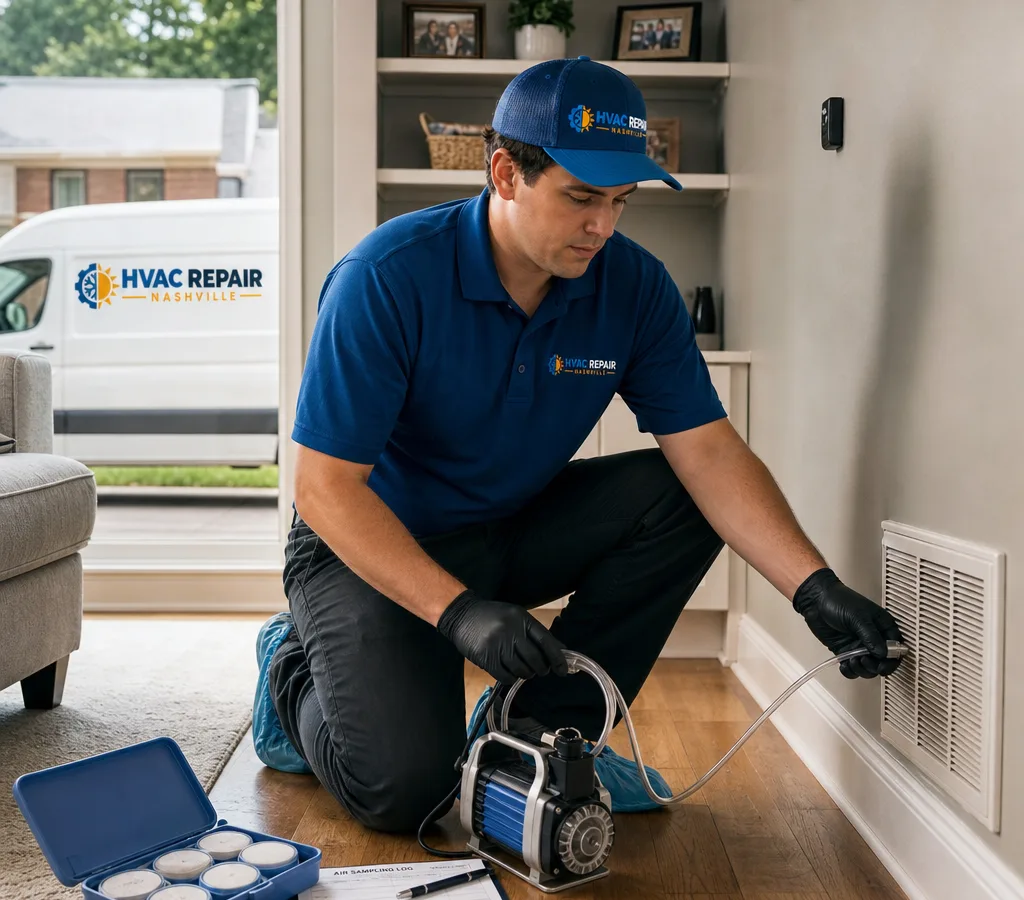
Get clear answers about what you are breathing indoors. Our team tests, documents results, and explains practical next steps to reduce pollutants and improve comfort in your home or small business.
If you are searching for air quality testing Nashville TN, you usually want one thing: reliable information you can act on. Odors, allergy symptoms, visible dust, recent water intrusion, or a new renovation can all raise questions about what is in the air.
Air quality testing is a measurement service. We discuss what you have noticed, choose the right sampling approach, document conditions, collect samples, and review the results in plain language. The goal is to help you decide what to fix first and what can wait.
HVAC Repair Nashville focuses on practical outcomes: identifying likely pollutant sources, understanding how airflow may move them, and outlining realistic ways to improve indoor air quality.
A good test starts with the right question. Different pollutants require different sampling methods, and the best approach depends on what you are experiencing and where it is happening.
Common targets for indoor air quality testing in Nashville TN include:
You also receive context about sampling locations, HVAC operation, closed windows, recent cleaning, humidity, and ventilation patterns that may affect the findings.
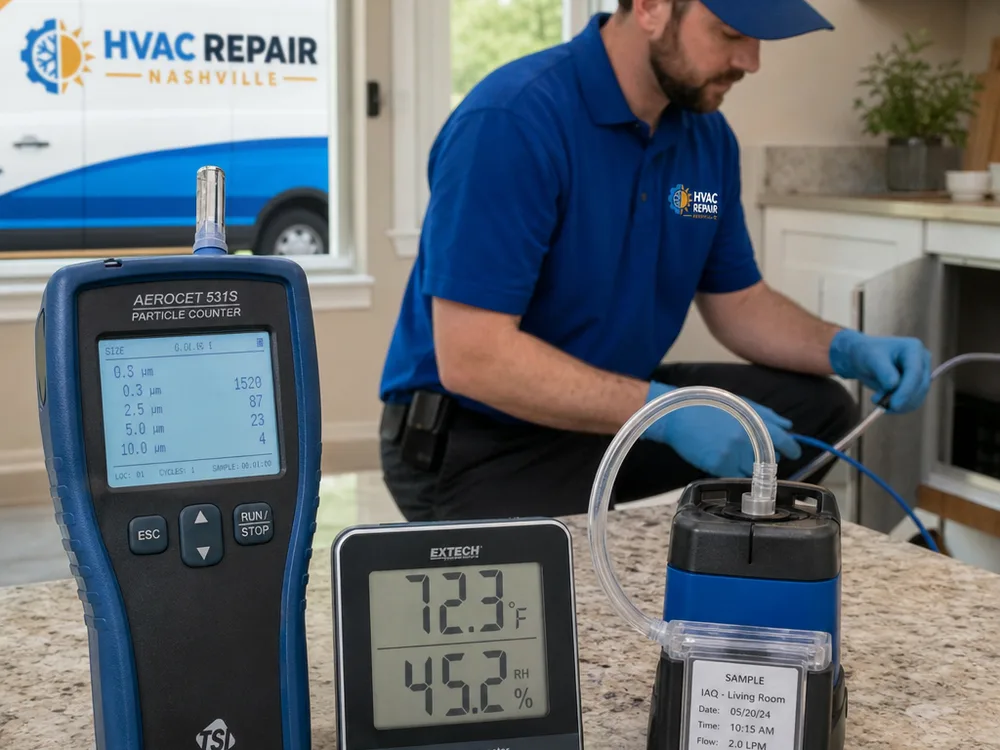
Testing helps narrow the cause. That means you can focus on the room, material, or airflow issue most likely to be driving the problem.
Documented conditions and results are easier for a landlord, builder, or insurance adjuster to act on than a description of symptoms.
Results can guide filtration choices, ventilation adjustments, and humidity-control options that match the actual issue.
After drying repairs or a remodel, testing can help determine whether indoor conditions have returned to a normal baseline.
Many IAQ issues are localized. Comparing problem rooms with control areas can point toward sources such as damp cavities, stored chemicals, or return-air pathways.
Nashville’s humid summers and cooler winters both affect indoor air. Higher humidity can support microbial growth on damp materials and make rooms feel stuffy. During winter, closed windows and reduced fresh-air exchange can allow indoor-generated pollutants to accumulate.
Housing styles also shape testing. Older homes in East Nashville and Sylvan Park may have more pathways for outdoor air and dust, while newer or renovated properties in The Nations and Germantown can be tighter and more dependent on mechanical ventilation. In downtown condos and apartments, shared walls and stacked units can make airflow and odor pathways especially important.
During testing, we consider return and supply locations, filter type and fit, visible duct leakage, pressure imbalances from exhaust fans, and signs of persistent moisture such as staining, swollen trim, or repeated condensation.
We start with what you have noticed, when and where it happens, recent leaks or renovations, and sensitivity concerns. Then we walk the space and choose sampling points.
We note temperature, relative humidity, open windows, and HVAC operation. These conditions help us interpret the results accurately.
Depending on the concern, this may include spot measurements or time-based sampling in complaint areas, a comparison area, and sometimes the return-air path.
We explain what the results mean and outline priorities. When filtration, ventilation, humidity control, or repairs are appropriate, we explain why and which options fit your system.
Air quality testing in Nashville typically ranges from about $250 to $900+, depending on what you are testing for, how many areas need sampling, and whether laboratory analysis is involved. A basic visit with targeted measurements is usually at the lower end, while multi-room sampling for moisture-related concerns or VOCs tends to cost more.
The final price mainly depends on the number of samples, sampling media and laboratory work required, and the investigation’s complexity, including multiple levels, crawlspaces, attics, or intermittent odors. Exact costs are confirmed after the onsite assessment and testing plan are set.
If something feels off in your home, testing is the fastest way to replace guesses with a written plan you can follow.
Call for a Free QuoteStraightforward answers about appointment timing, sampling conditions, preparing your home, and understanding the findings.
Most appointments take 60 to 120 minutes onsite, depending on the number of rooms and whether time-based samples are collected. If laboratory analysis is included, timing depends on the lab and will be explained before sampling begins.
Often, yes, because HVAC airflow affects what occupants breathe and where pollutants travel. We may operate the system normally or compare conditions with it on and off when airflow is part of the question.
Yes. Single-room testing is common for spaces such as a musty basement, nursery, or bedroom where symptoms occur at night. At least one comparison measurement elsewhere in the home is usually recommended for context.
Keep the home in a normal living condition for 24 hours beforehand. Avoid heavy cleaning, painting, strong fragrance products, and unusual equipment such as ozone generators because these can temporarily alter particle and VOC readings.
Yes. Recommendations may include improving filtration, correcting moisture sources, sealing return-air leaks, adjusting ventilation, or prioritizing repairs in the areas most likely to be contributing.
Air testing can support a mold investigation, but it is not always the complete answer. Moisture evidence, building materials, and airflow matter. With a known leak history, combining sampling with a moisture-focused inspection may provide better context than relying on one data point.
Tell us what you are noticing, where it is happening, and any recent changes in the home. We will recommend an appropriate testing approach and walk you through the results and the most practical fixes.